Antifog
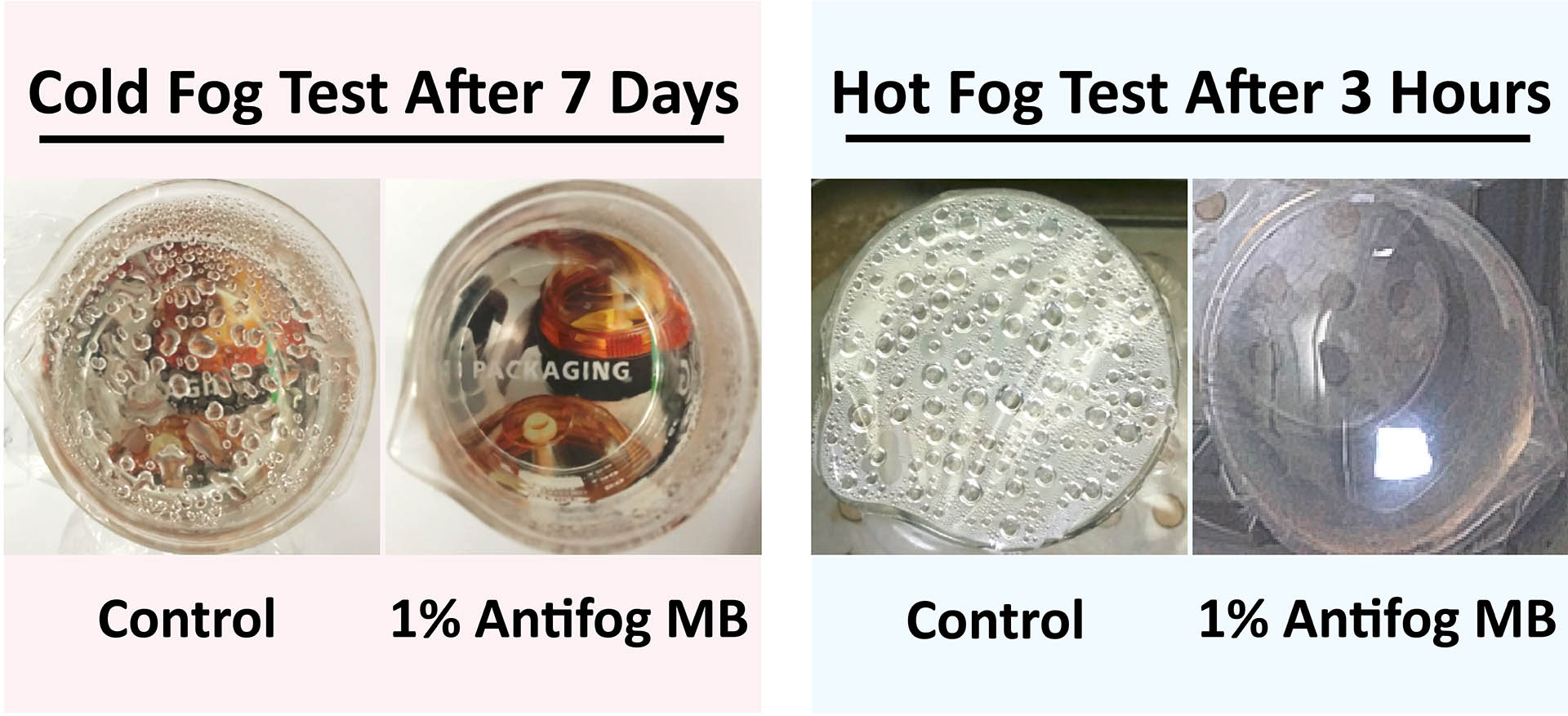
Antifogs are designed to prevent the formation of water droplets on polymer films and packaging, effectively eliminating the fogging effect.
Overview
Fogging occurs when the air near the surface of a film cools below its dew point and water vapor condenses into tiny droplets on the film surface. This is often a result of a temperature differential between the inside and outside of the packaging. The difference in the surface tension between the polymer packaging surface and the water causes the water droplets to form on the surface. Water on the surface refracts light making it more difficult to see the product inside the polymer packaging. In the case of food packaging, the accumulation of water on the surface can lead to spoilage of the product contained within. Antifog agents also find use in agricultural films where their presence helps prevent the spread of disease and improves crop yield and growth rates.
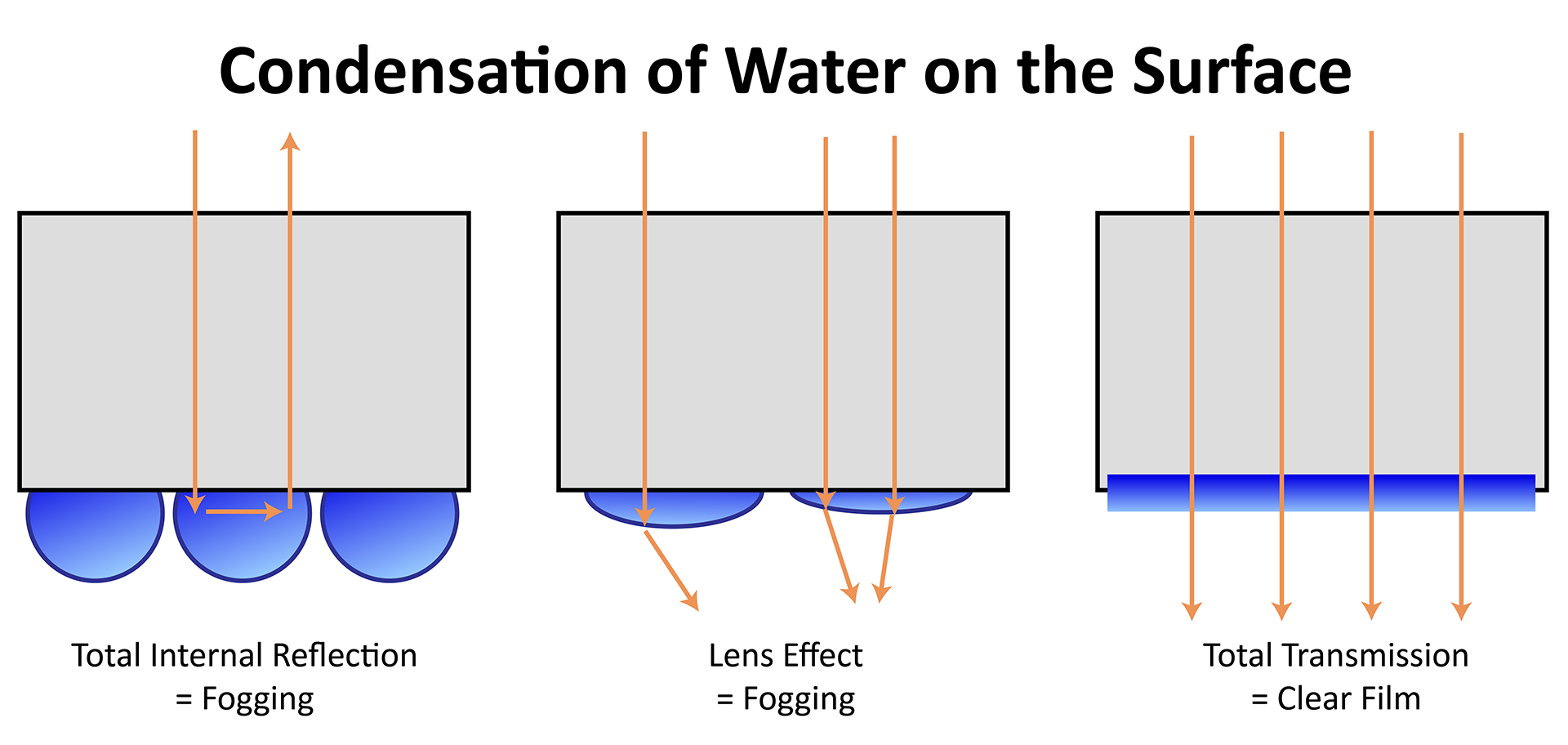
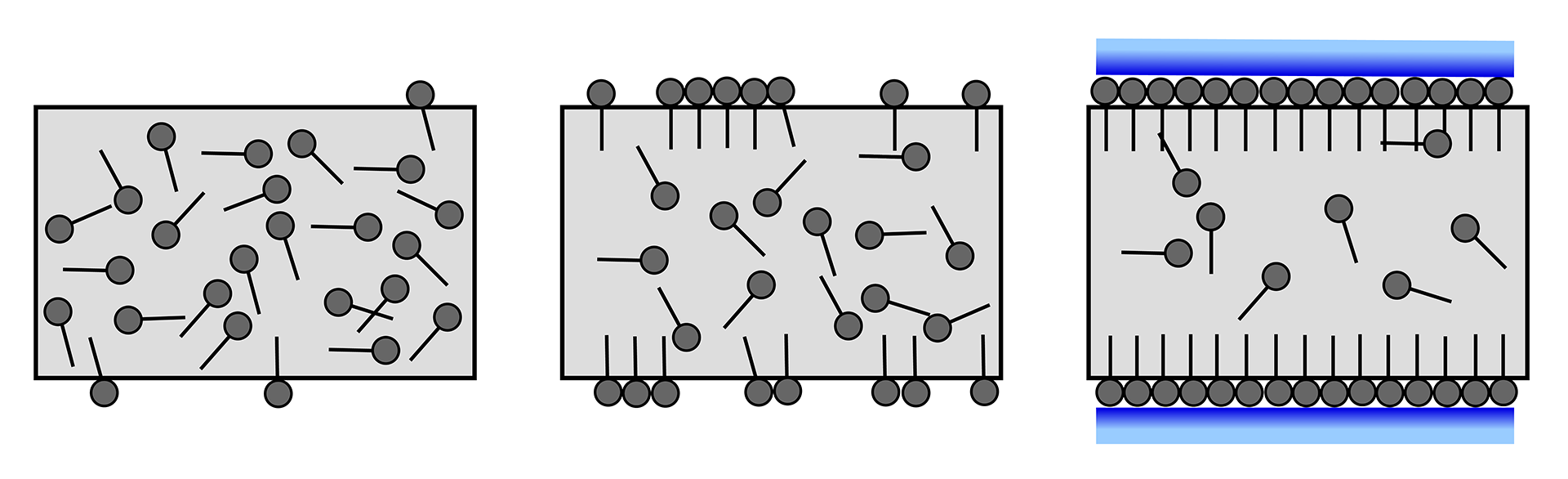
Antifogs are incorporated into the polymer and migrate to the surface. They have a hydrophilic moiety which reduces the difference in surface tension between the water droplets and the packaging. The condensed water droplets spread to a continuous film of water on the surface that appears clear.
Features
The performance of antifog agents can be impacted by the film structure, application and composition. The goal of the antifogging agent is to have minimal adverse effects on the packaging properties. In the case of film packaging, the addition of antifog should not impact clarity, cling, strength, sealability or print adhesion.
Ingenia’s antifogging agents are designed for both hot and cold fog applications. These antifog masterbatches offer high transparency, have minimal impact on the seal properties of films and are highly efficient with low letdown ratios.